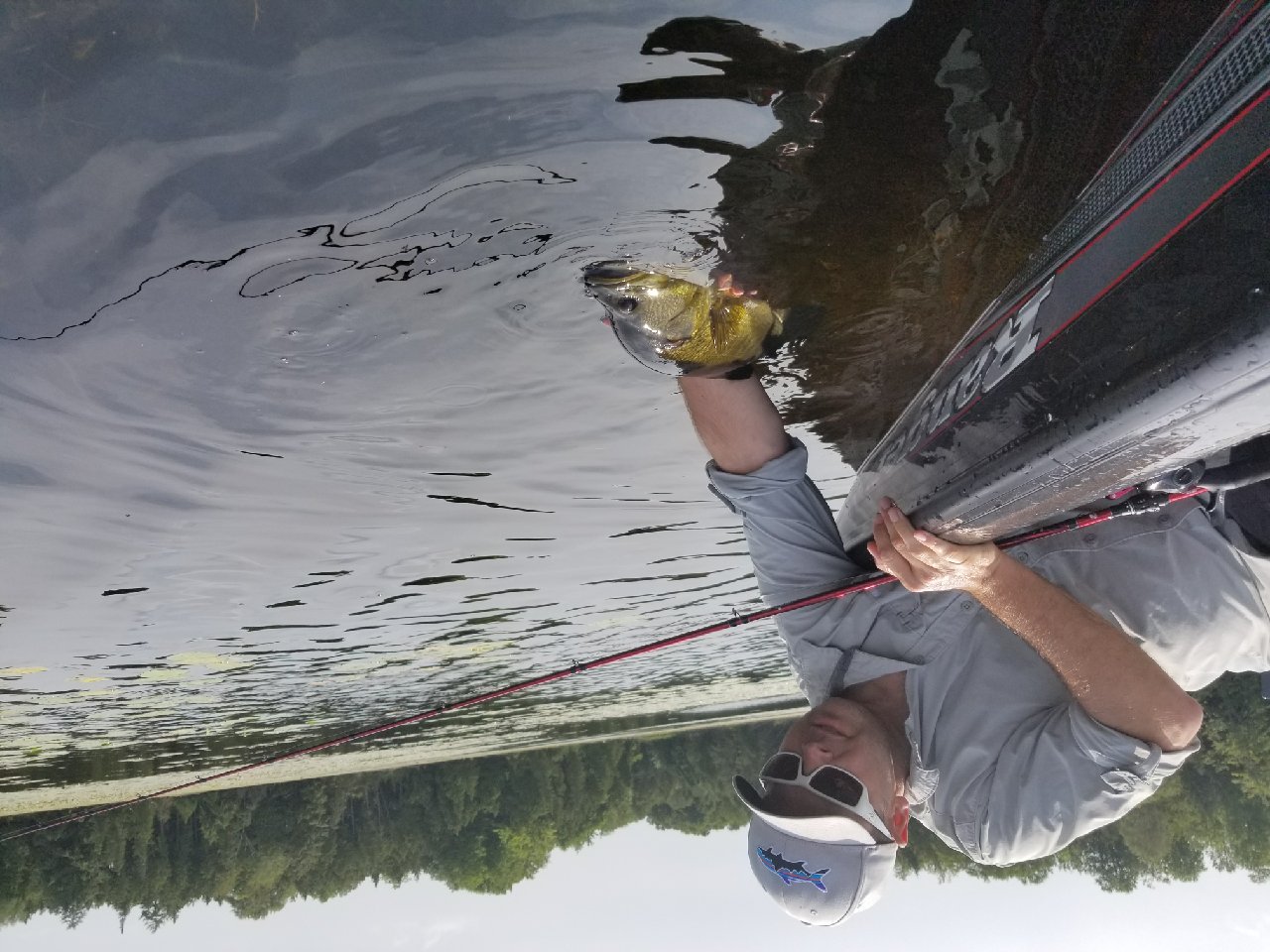
Dr. Cooke conducting field work at Queen’s University Biological Station (QUBS).
World Fisheries is celebrated annually on November 21st to highlight the importance of sustainable practices in fisheries, human rights for small-scale fishing communities, improving working conditions and eliminating illegal and unregulated fishing.
QUBS plays an important role in facilitating research into local fish populations and informing sustainable fishing practices.
For World Fisheries Day, we spoke with Dr. Steven J. Cooke, a biologist and professor at Carleton University, about his research at QUBS and the challenges facing Canadian fisheries.
While other kids were tuning into Saturday cartoons, Cooke was busy watching fishing shows, with the initial goal of becoming a fisheries manager. As a senior undergraduate student, he became involved in fisheries research and never looked back.
Cooke first visited QUBS in 1995 for a fish biology field course and has spent over three years of his life living at the Biological Station since – with over 40 per cent of his research program conducted at QUBS.
“For me, QUBS is a second home, a natural treasure, and an epicentre of ecological research,” Cooke said.
Translating Research into Real World Impact
“As a naïve but confident student, post doc, and even new professor, I was convinced my studies were going to transform fisheries management and policy overnight,” he said.
Instead, he found the secret to lasting change requires coproducing research with stakeholders to ask the right questions, and synthetizing evidence into useable formats for decision-makers.
Over time, Cooke’s research at QUBS has helped shape fisheries management and conservation, from better ways to prevent freshwater turtles from being accidentally caught in small-scale commercial fisheries to nature-inspired structures that curb shoreline erosion, as well as informing new recreational fishing rules.
Earlier this year, Cooke was appointed as a Canadian commissioner on the Great Lakes Fishery Commission by Prime Minister Carney, giving him decision-making authority and a new perspective on the work of front-line fisheries professionals, he said.
Challenges Facing Canadian Fisheries
Cooke’s research focuses on freshwater fisheries, including millions of recreational anglers, culturally-important Indigenous fisheries, and a small but vibrant inland commercial fisheries sector.
“Even if you can’t see fish, they are there,” he said. “Freshwater fish populations create opportunities for people to interact with fish in diverse ways including for nutrition, well-being, fun, and cultural identity. That is special and something we need to protect.”
While poorly managed fisheries are part of the problem, the cumulative impact of other stressors such as invasive species, pollution, habitat loss, and climate change are often the driver of population decline and degradation of ecosystem health in Canada, he said.
Cooke emphasizes the importance of conserving habitat for healthy and productive fish populations and fisheries and working alongside other sectors to find win-win solutions that benefit people and fish populations.
“If we protect habitat and the waters where fish live, mother nature and good resource management can help us to find the right balance between preservation and human use,” he said.
Training the Next Generation of Scientists
At QUBS, his students also have the chance to connect with peers across disciplines and learn from one another, Cooke said.
Whether it’s out in the field or through informal interactions during meals and downtime, students get to know other students studying very different species and types of experiments.
“QUBS is a special place and is much more than the unique infrastructure and natural areas – it is a community of learners working together to understand and protect nature for the next generation,” he said.
“Trainees that spend time at QUBS leave with an appreciation for how special field stations are and an enthusiasm for learning and sharing.”